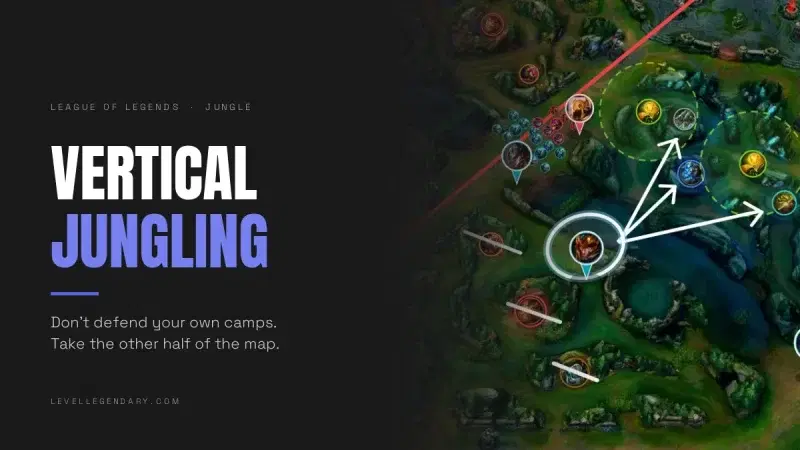
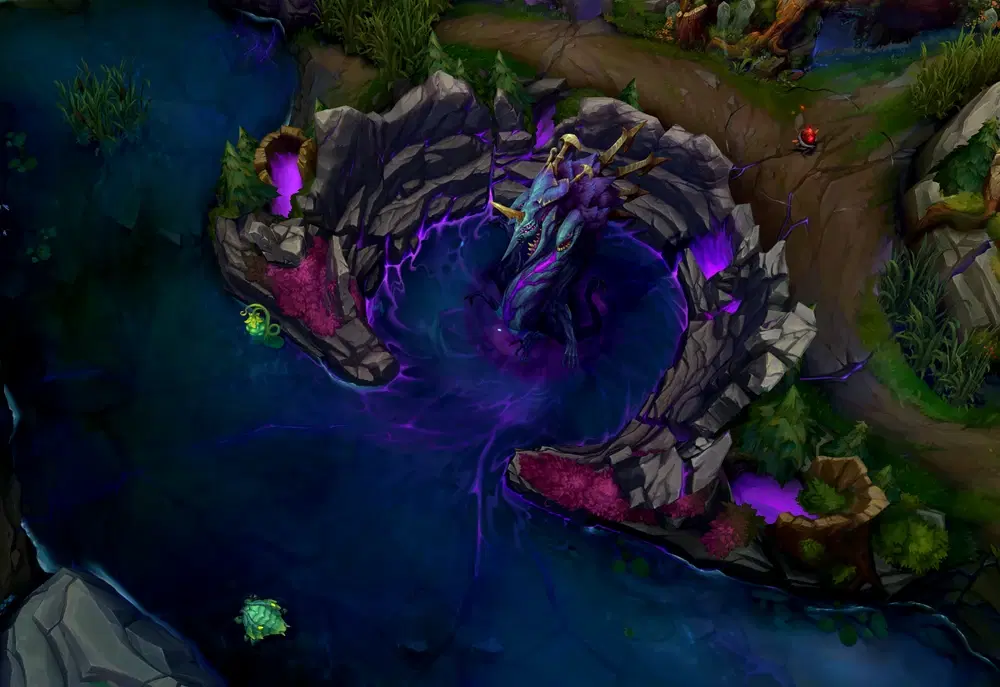
An objective you cannot contest is not an objective, it is bait, and most junglers take the bait because the timer told them to.
The price is rarely just the Dragon. You walk into the river without priority, you lose the fight you were never going to win, and while you are dead they take the Dragon, your camps and usually a tower on top. One mistimed objective can cost more than the four minutes of farming it interrupted.
Objective prioritisation is one of the most important skills a jungler can develop. Kills, camps and ganks are visible ways of gaining an advantage, but objectives are what let a team convert that advantage into something permanent. Dragons, Rift Herald, Void Grubs, Baron Nashor, towers, and even enemy jungle camps all carry different value depending on the state of the game.
The mistake many junglers make is treating objectives as if their value is fixed. It is not. A Dragon is not always more important than a tower. Herald is not always more important than a successful gank. Sometimes giving up an objective is the correct play, because taking something more valuable elsewhere leaves you further ahead.
Good objective prioritisation is not about asking which objective is available. It is about asking which play gives your team the greatest advantage right now, and what the enemy gets in return if you choose it.
Objectives are a resource, not a checklist
A common habit among inexperienced junglers is to play the game like a to-do list: take Grubs, take Dragon, take Herald, take Baron, repeat. The problem is that League is not played on a fixed schedule. The value of every objective moves with champions, gold, lane priority, wave states, item spikes, respawn timers and where both junglers are standing.
Imagine Dragon spawns in 30 seconds. Your bot lane has just recalled, your mid is shoved under tower, and the enemy jungler was last seen bot side. Technically Dragon is available. That does not make it a good objective. Walk into the river without lane priority while your bot lane is still buying, and the enemy arrives first and forces you into a fight you cannot win. You lose the Dragon, you die, and you probably lose your next few camps as well.
The question is always the same: can we realistically secure this without giving the enemy something more valuable?
Objective priority starts with lane priority
The single biggest factor in whether an objective is worth taking is lane priority. If your mid and bot can push their waves in first, they can move to Dragon before the enemy laners do. That means more bodies around the pit and a much safer contest. The same logic applies top side: if your top and mid can move first, the whole situation around Grubs or Herald changes.
This is why you cannot think about objectives separately from your lanes. You are not taking Dragon with your jungler. You are taking it with your jungler, plus bot lane, plus mid lane, plus vision, plus wave pressure. When those pieces are missing, the objective may simply not be worth contesting.
If the setup is hard to picture, build it in our free League of Legends map planner: place the ten champions, drop the wards you would want before the spawn, and look at the vision you would actually be contesting with.
Always consider what the enemy can do instead
Objective prioritisation is really a question of trade-offs. If the enemy jungler starts Dragon while you are on the other side of the map, your first thought should be what you can take in exchange:
- Rift Herald or Grubs on the opposite side
- An invade into their top-side jungle
- A tower that is ready to fall
- A gank on their top laner
- Their camps, if nothing else
The worst response is usually to do nothing. If the enemy gets Dragon and you keep farming your own jungle, they gained and you did not. You want their decision to be expensive. If they spend 40 seconds securing Dragon, spend those 40 seconds taking their entire top jungle and chunking a tower. Now the trade is close to even.
That is one of the fundamental rules of jungle macro: when you cannot contest an objective, find the highest value trade available on the opposite side of the map.
Not every Dragon is equal
Dragon is where most prioritisation mistakes happen, because the reflex is simply that Dragon has spawned, so we should fight for it. Before committing, run through what actually determines its value:
- How many Dragons does each team already have?
- Is the next one Soul?
- How does your team compare to theirs in a straight fight?
- Can you realistically contest the river at all?
- What is the gold difference?
- Are your important ultimates up?
- Does the enemy jungler have Smite?
- Can your team physically get there first?
If the enemy has three Dragons and the next one is Soul, the objective is enormous and a risky fight may be correct, because conceding Soul can decide the game outright. If it is the first Dragon and your team is weak around the river, giving it up is often completely fine as long as you take something elsewhere. The value is context, not the objective itself.
Soul point changes everything
Dragon Soul is the clearest example of priority shifting through a game. Conceding the first Dragon is rarely damaging. Conceding the fourth can lose you the game. So your priority has to escalate as the count climbs.
When the enemy is approaching Soul point, preparation starts well before the Dragon spawns. By the time it appears you want:
- Lane priority on the relevant lanes
- Vision control around the pit and the approaches
- Recalls done and items bought
- Ultimates off cooldown
- Smite up
- Your team positioned on the correct side of the map
- An actual plan for how the fight opens
Waiting for the spawn timer before you start thinking about it is usually too late. The objective fight often begins minutes before the objective does.
Grubs and early top-side objectives
Void Grubs follow the same principles. They are valuable because they accelerate tower pressure early, but how valuable depends entirely on the champions and lane states around them. If your top laner has priority and your mid can rotate, the objective is relatively safe. If your top is stuck under tower and the enemy has a strong early composition, forcing it can hand them a free fight.
Again, the objective is not the deciding factor. The map state around it is. Look at the objective, then look at the lanes next to it.
Rift Herald and the value of tempo
Herald is interesting because its value is not really the objective. Its strength is the ability to convert jungle control into tower damage and map pressure, and that only happens if you use it with something else.
Say you have Herald and your top lane has a large wave pushing toward the enemy tower. Rather than dropping it at random, combine the two: your laner shoves, the enemy has to respond, then you summon. Now they choose between defending the tower and dealing with your team, and both options cost them something.
That is stacking advantages. Objective plus minion wave plus lane priority plus champion pressure is worth far more than the same Herald used in an empty lane. Prioritisation is not only about which objective to take, it is about how much you extract from it afterwards.
Baron is different
Baron can win a game outright, which is exactly why it is one of the easiest objectives to throw over. A team wins a fight, gets excited, and starts it immediately. But winning a fight does not automatically make Baron safe. Before you start it:
- How many of them are actually dead, and for how long?
- Where is the enemy jungler?
- Do they have vision of the pit?
- What health is your team on?
- Can anyone walk into the pit and contest?
- Can it be stolen?
- Can you finish it before they arrive?
The enemy jungler’s position matters most of all. If their jungler is alive and nearby, starting Baron often turns into a coin flip on a Smite. If their jungler is dead, it is a different objective entirely. Removing the enemy Smite threat is usually the single biggest factor in whether Baron is safe.
Towers can be worth more than objectives
Neutral objectives get prioritised over structures far too automatically. Imagine you have just killed the enemy jungler. Dragon is up, but your bot lane has a huge wave crashing into the enemy tower. You can walk to Dragon, or you can use the numbers advantage to take the tower. Often the tower is worth more right now, because it is permanent:
- It gives permanent map access
- It opens the enemy jungle
- It removes a safe spot for the enemy laner
- It gives your team space to place vision
- It lets you push deeper on that side for the rest of the game
Objective prioritisation includes structures, not only the things that spawn on a timer.
Playing from behind, and from ahead
Prioritisation matters most when the game is uneven. Behind, you cannot play for the same objectives as the team that is ahead: they have stronger champions, better vision and more map access, and contesting every Dragon and Baron just accelerates the loss. Instead you trade. Give up the Dragon, take towers, steal camps, push side lanes, look for picks across the map. The aim is to shrink their advantage while creating chances to catch up.
Ahead, the priority inverts. You are turning an advantage into control: securing vision, invading camps, holding objectives and denying the enemy the space to recover.
It is really about forcing bad choices
Objective prioritisation is another way of putting the enemy in situations where every option costs them. You are trying to create choices like:
- Defend Dragon or lose your tower
- Contest Baron or give up your inhibitor
- Defend your jungle or concede Soul
- Help your jungler or lose your lane
The strongest macro decisions are the ones the enemy cannot answer in full. Your job is to work out which resources actually matter, then use your team’s position to force that choice.
Three rules before you start anything
- Check lane priority before the timer. You do not take Dragon with your jungler, you take it with two lanes, vision and a wave. If those are missing thirty seconds out, the objective is not yours.
- Never concede for free. If they start something you cannot contest, spend the same forty seconds on the far side: their top jungle, a tower that is ready, a gank they cannot answer.
- Find the enemy Smite before Baron. A living enemy jungler near the pit turns Baron into a coinflip. Dead jungler, different objective. That one fact outweighs every other Baron consideration.
Conclusion
Objective prioritisation is not about taking every Dragon, Herald, Grub and Baron that appears. It is about reading what each one is worth in the game in front of you. A Dragon without lane priority can be a trap. A tower can beat an early Dragon. An invade can beat an objective you were never going to win. A Baron after killing their jungler can end the game. And conceding one objective is correct whenever you take something bigger on the other side.
The best junglers are constantly running three questions:
- What can we take?
- What can the enemy take?
- What happens if we choose this play?
Once you think this way, objectives stop being things that spawn on a timer and become tools for controlling the map and manipulating what the enemy is allowed to do. The goal is not to take every objective. It is to take the ones that matter, at the moment they matter, and to make sure everything the enemy takes costs them something in return.
But my team walks into the pit without me
They do, and once three of them are standing in the river the decision has effectively been made for you. Arguing with it mid-fight loses the objective and the fight both.
The fix is earlier than you think. Teams walk into pits because nobody told them what the plan was, so ping the objective as a question thirty seconds before it spawns rather than as a demand when it does. Ping the enemy jungler the moment you see him. If you have decided to give this one up, ping the trade you are taking instead so they can see you are not just farming while they die. Most solo queue objective disasters are communication failures dressed up as macro failures, and the ping that would have prevented it costs nothing.
From the coach
The players I coach almost never ask me whether they should have taken the Dragon. They ask why the fight went badly, and the answer is usually that the fight was decided a minute earlier, by where their lanes were standing when the timer hit thirty seconds.
Fronex, Master, coach at Level Legendary. See the coach profile.
If you want these calls drilled against your own replays rather than in theory, that is what league coaching sessions are built around.
If you want these calls checked against your own games rather than a general rule, your first session is free: a coach reads your OP.GG and goes through one of your games with you, live, with no card required.